





Light-G-comp / Sabanci University
September 4, 2025 2025-09-11 7:17Light-G-comp / Sabanci University
LIGHT-G-COMP
LIGHT-G-COMP Project responds to the urgent need for decarbonization by transforming conventional and non-recyclable waste into graphene and its derivatives. Light-G-Comp aims to develop next-generation lightweight, recyclable composites powered by graphene and multi-scale reinforcements tailored for high-performance sectors including Automotive and Aviation.
The core focus of the project is to demonstrate the potential for upcycling thermoset and thermoplastic waste—including waste tires, PET, PE, and mixed plastics—into graphene-based functional materials. This underpins the goal of enabling a circular economy that will support plastic waste reduction in the UAE, leading to energy-efficient manufacturing. Using Life Cycle Assessment practices, the team aims to optimize the sustainability of this value chain by achieving ≥10% weight reduction and ≥10% cost savings, enabling an overall CO₂ footprint reduction.
To complement this agenda, the project will also design engineered composites for the aerospace, automotive, and plastics industries using nano-coating technologies, tailored resins, and advanced welding processes.
For more information on how this project brings a new dimension to waste management, sustainable nanoengineering and upcycled lightweight composite structures, please visit the project website Light-G-Comp
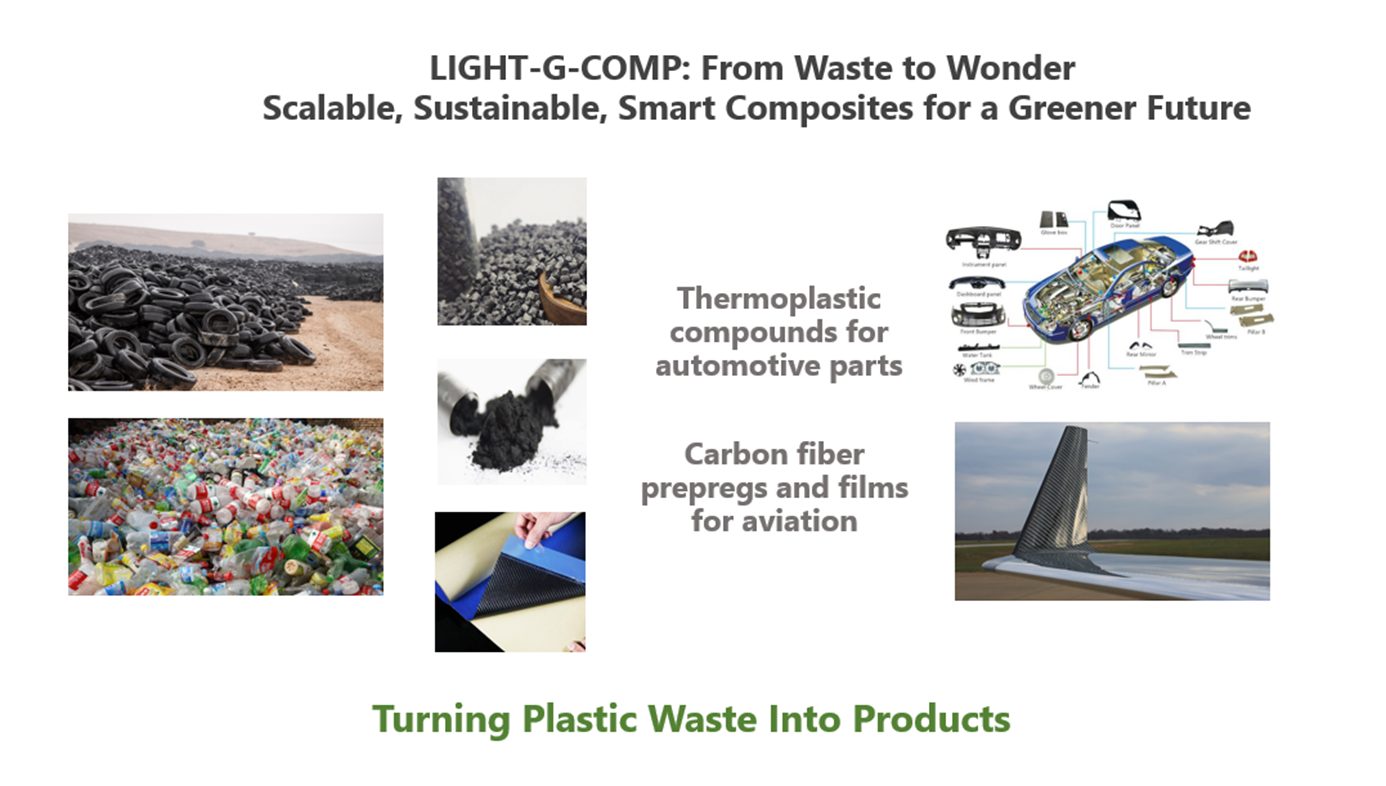
Outcome
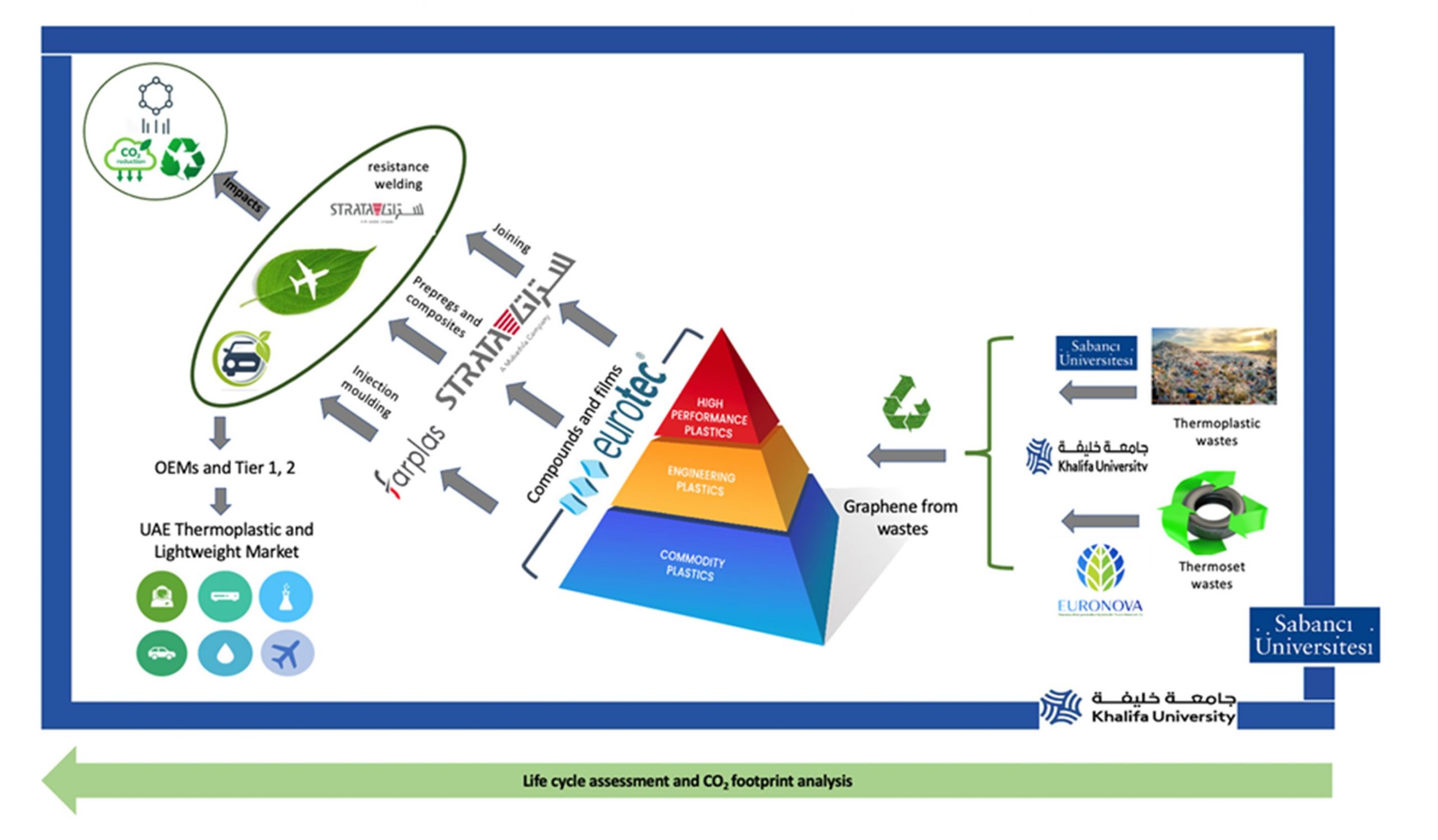
Demonstrators arising from the project target commercial applications including:
1. Aerospace: production of lightweight prepregs and films, high-performance thermoplastics and welding technologies.
2. Automotive: production of sustainable injection-molded parts and recycled carbon/natural fiber-reinforced systems.
3. Plastics Industry: recyclable packaging and consumer goods from upcycled.
Consortium
The project is delivered by an international consortium involving academic teams in Turkey and the United Arab Emirates (UAE) working closely with Industrial partners in the Plastics, Aerospace and Automotive sectors in Turkey and the UAE. Find out more about the consortium here:
Sabanci University
View more
Sabanci University
Khalifa University
View more
Khalifa University
Strata
View more
Strata

Farplas
View more
Farplas
eurotec
View more
eurotec

EURONOVA
View more