





Directed Projects
June 29, 2025 2025-09-09 8:41Directed Projects
Directed Projects
The UAE has been a long-standing advocate of graphene-based research, providing a significant multimillion-dollar contribution to the establishment of the Graphene Engineering Innovation Center (GEIC) at the University of Manchester in 2014.
Following the establishment of RIC2D, a research focused partnership was established with the University of Manchester in 2022, leading to the launch of 5 projects to be jointly delivered Khalifa University over a 3-year period, commencing in 2023. At a lower end of the TRL spectrum, the projects aim to deliver longer-term R&D-led disruption innovation:
DP1: Energy
Novel 2D-crystals for the hydrogen economy

Prof. Lourdes F. Vega
Khalifa University

Prof. Sir Andre Geim
University of Manchester
Hydrogen generation and utilization technologies require proton-conducting membranes as a central element, but the known materials hinder performance at the required conditions, which ultimately translates into high cost.
Atomically thin crystals are a completely new class of materials that conduct protons via fundamentally different mechanisms anticipated to enable a step change in performance in hydrogen technologies and lower cost.
Explore promising technological opportunities for hydrogen production and separation enabled by these 2D materials:
- Investigate the proton permeability of new 2D crystals
- Understand how intense electric fields can accelerate the water dissociation across 2D electrodes
- Increase the catalytic activity of 2D materials through nano-scale ripples
- AI-enabled selection of efficient materials for hydrogen production and separation.
- New proton-conducting materials able to operate in the 1000C - 4000C gap.
- Removing Pt and other precious metals from hydrogen technologies.
DP2: Water
2D-enabled Functional Membranes for Water Treatment and Desalination

Prof. Shadi Hasan
Khalifa University
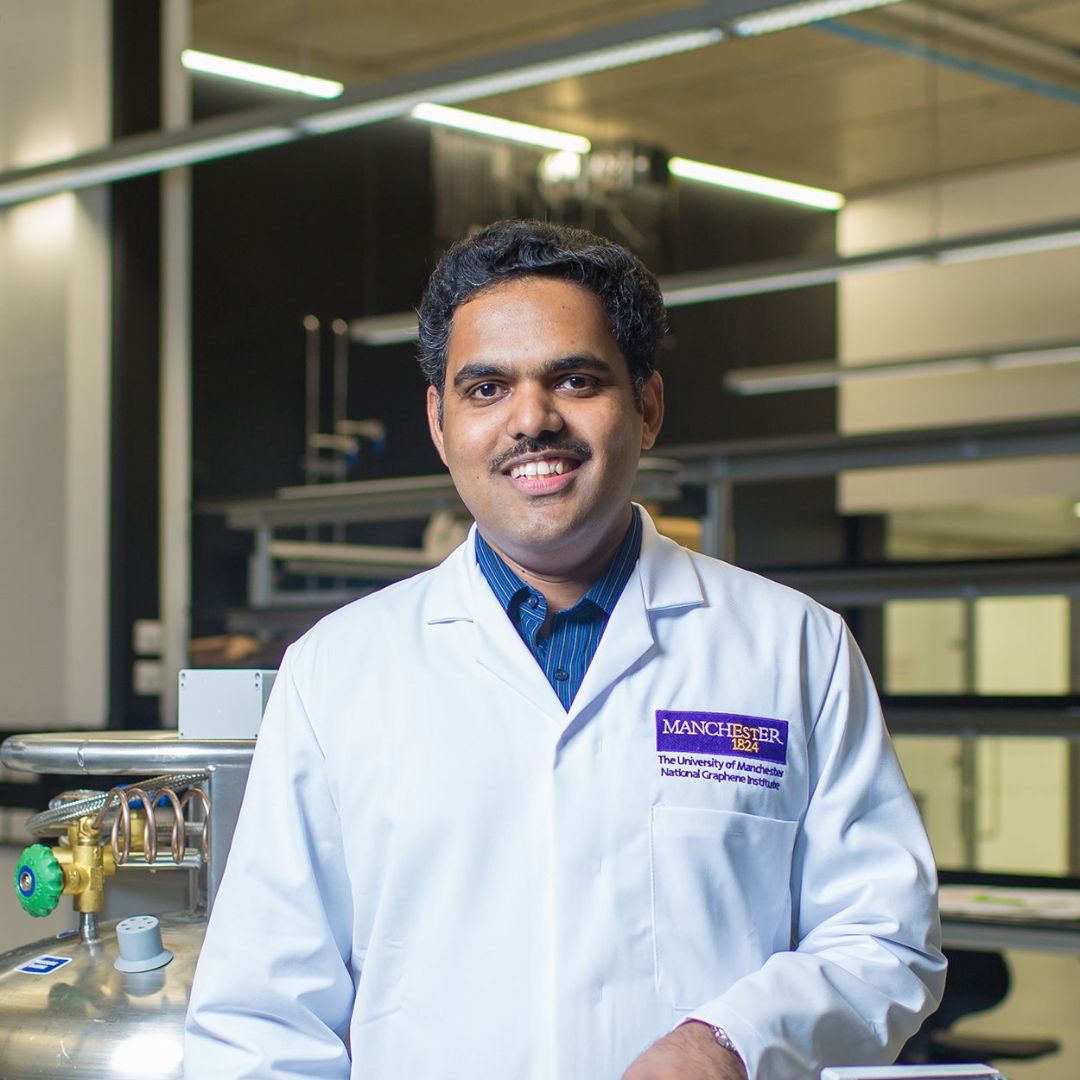
Prof. Rahul Nair
University of Manchester
Water treatment and desalination technologies suffer from fouling and ageing limitations causing increased treatment time operations costs, damage to the membrane and release of toxicants.
Currently membrane separation is only based on broad pore size and surface charge, limiting separation efficiency, as well as reducing opportunities for integrated self-cleaning and modulated operation.
Nanosheet integrated membranes offer a unique platform for the development stimuli responsive membranes. A technological change to enable membranes to be responsive to triggers will offer a step change towards self-cleaning, self-sensing or catalytic membrane separation solution with narrow pore size distributions.
This will both enhance separation and purification efficiency and provide process intensification and reduction of footprint and energy requirements.
Graphene and other 2D nanomaterials will be directly incorporated or used as a platform for responsive chemicals grafting into nanoporous polymeric structures to generate selective triggers such as light, electricity, pH or heat.
In addition, high loads of 2D nanomaterials will be incorporated across nanoporous polymeric membranes to develop a new class of membrane fabrication solutions by 3D printing.
More selective and responsive separation solutions with potential for municipal wastewater treatment and & food, industrial and oil-rich produced water.
The novel membranes will offer specific reactivity allowing for enhanced separation performance in terms of speciation and permeation.
DP3: Composites
Material Enhanced Structural Composites

Prof. Rehan Umer
Khalifa University

Prof. Prasad Potluri
University of Manchester
Key challenges remain in integrating graphene and other 2D materials into structural composites, to achieve uniform dispersion, manage resin viscosity, and enhance infiltration through fiber preforms.
The project seeks to improve the mechanical properties and performance of composites for aerospace and other high-value applications such as Hydrogen Storage Tanks.
Using innovative methods like digital material twins and automated systems with the latest vision-based technology for defect-detection to provide a step change to create strong, multifunctional fiber reinforced composite materials for niche markets.
The project seeks enhance the incorporation of 2D material into structural composites and improve material performance, targeting:
- scalable processes for dispersing graphene / 2D materials in composite structures
- Improved processing of 2D materials for industrial applications.
- Improved thermal and mechanical properties
- Improved strength at different operating conditions such as high pressures (up to 700 bar) and cryogenic (-250C) for leakproof storage of Hydrogen.
Close collaboration with STRATA Manufacturing to deliver outputs in an industrial environment including the development of graphene-loaded fabrics, tapes and towpregs as well as a roadmap for commercialization of 2D material enhanced H2 storage tanks.
DP4: Composites Project
Multifunctional Lightweight Materials

Prof. Kin Liao
Khalifa University
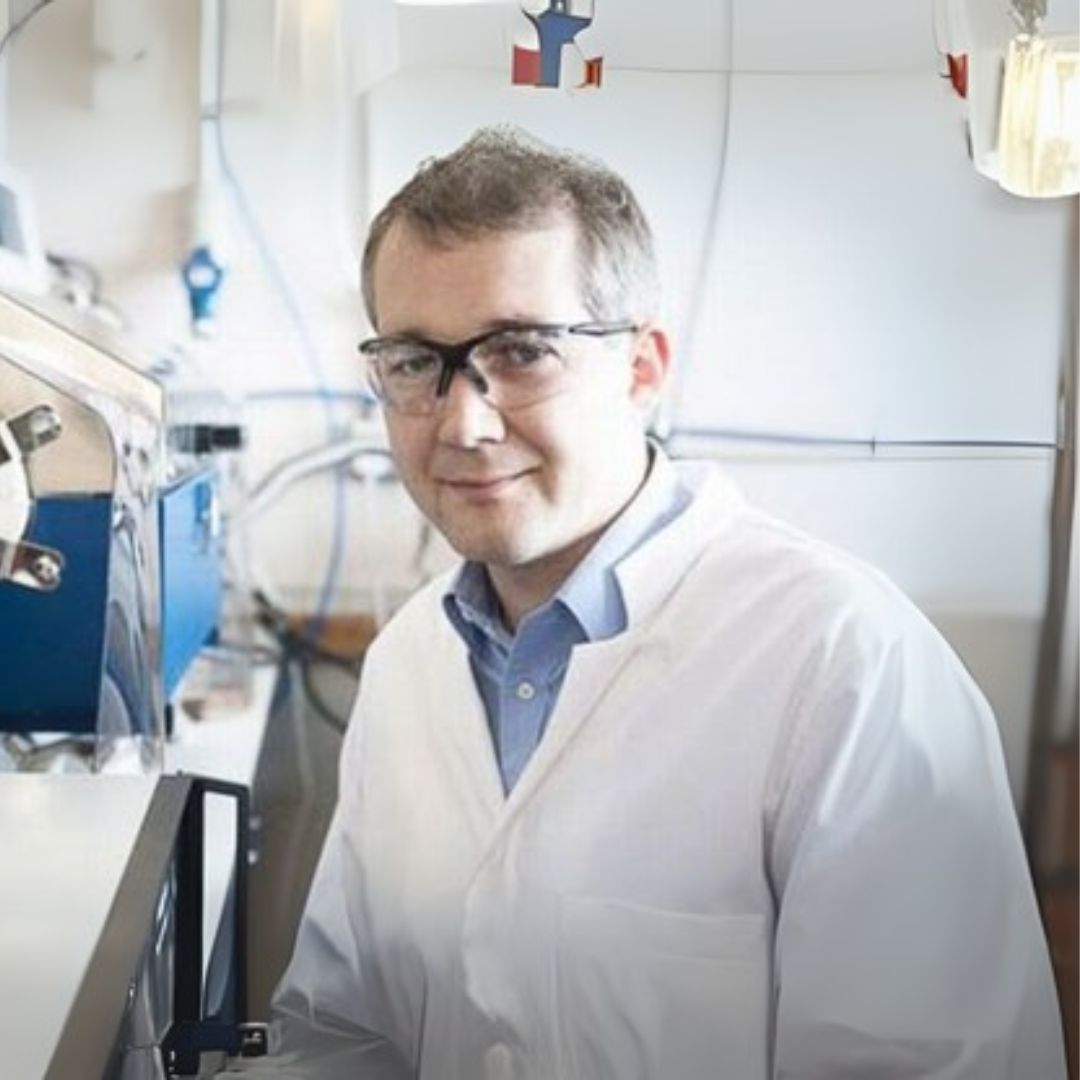
Prof. Ian Kinloch
University of Manchester
Identify 2D materials that can be used to construct high-performance, lightweight, multifunctional composites for applications in aerospace, biomedical, chemical, defense, and other key technological areas.
Develop enhanced lightweight ceramics and recycled thermoplastics using 2D materials.
Explore the potential of 2D enhanced composites to produce materials with significantly improved functionality including:
- Chemical barrier to prevent gas leakage;
- Super-hydrophobic coatings;
- Toughened ceramic structures.
Versatile multifunctional lightweight solids
with applications that include:
- Superhydrophobic protective coating for electronics.
- Polymer composite for chemical barrier.
- Structural & acoustic shielding.
- High-performance recycled plastics.
- Impact & fatigue resilient composites
DP5: Water Project
Graphene and 2D Materials’ Membranes and Nanostructures for Water Technology

Prof. Emad Alhseinat
Khalifa University
Prof. Rahul Nair
University of Manchester
Enhance the desalination process by developing superior fouling and chlorine resistant 2D materials-based membranes.
2D materials will be employed as additives to the membrane; each of the added 2D material will offer a unique nano-scaled property for improving the performance.
2D materials will be employed as additives to the membrane; each of the added 2D materials will offer a unique nano-scaled property for improving the performance.
Successfully utilize 2D materials to develop high-performance water technologies including:
- nanocomposite membrane;
- chemical-resistant membrane for desalination;
- eco-friendly hydrogel.
Water treatment technologies enhanced by 2D materials:
- composite membrane that separates and decomposes contaminants.
- more chemical tolerance membrane.
- hydrogel for water augmentation.